Sunday, 31 May 2015

Impressions of the Venice Biennale Day 1

This May I attended my first Biennale in Venice (All the World's Futures) as a class trip led by my professor Briony Fer (what a treat!). Other than being completely overwhelming, exhausting and sort of like Epcot in Disney World for art lovers, I thought it was incredible and had the best time. The main exhibition, was curated by Nigerian curator and art critic Enwezor Okwui. The portion of the exhibition located at the Giardini included some great pieces and represented Western artists dealing with postcolonial material more than the portion at the Arsenale, which showed work by many African artists, many of them not too well known. At the Giardini, I really liked Ellen Gallagher's paintings. I had seen her solo show at the Tate Modern a few years back and remembered finding her work really interesting and visually stimulating and engaging.

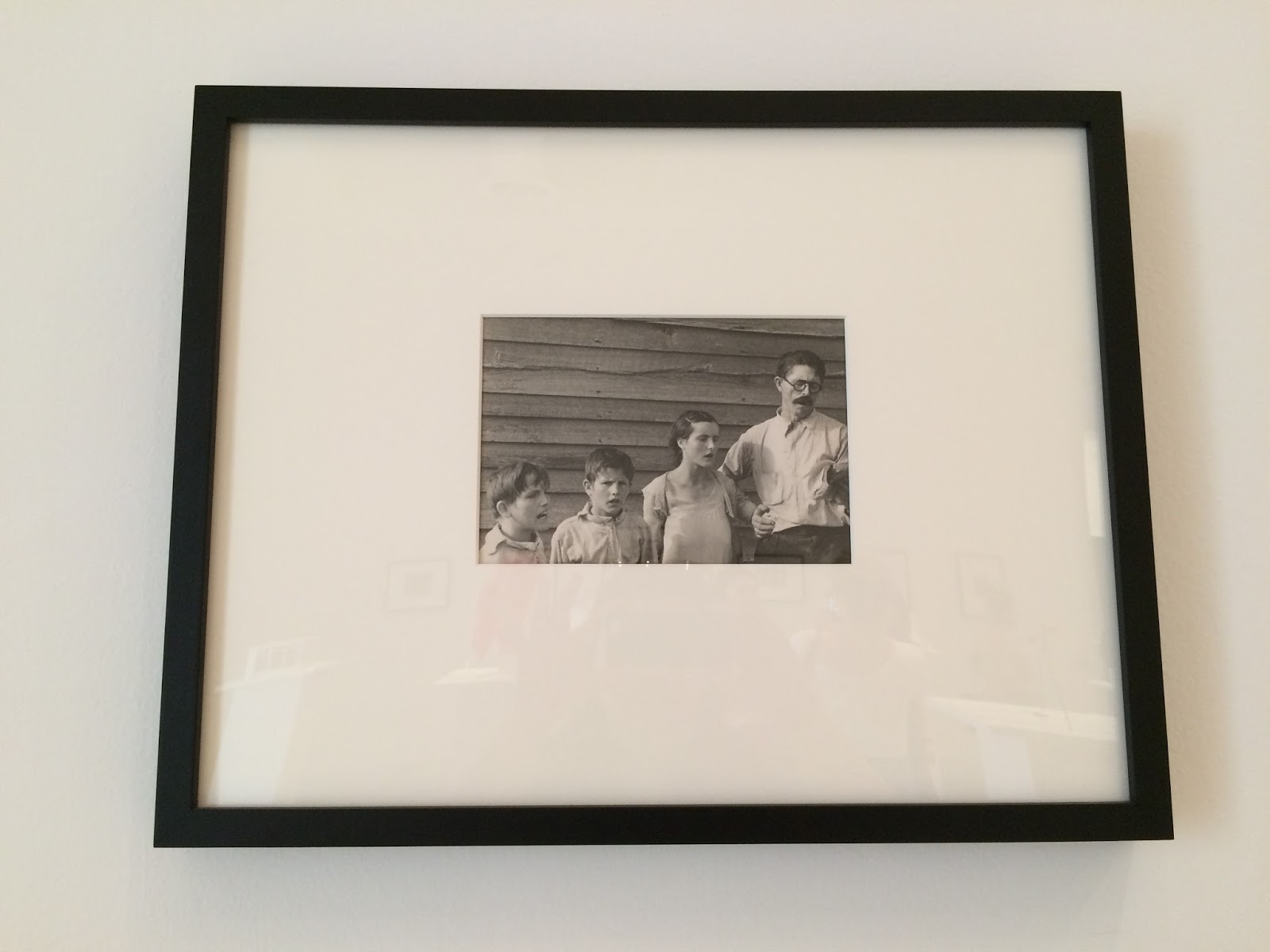
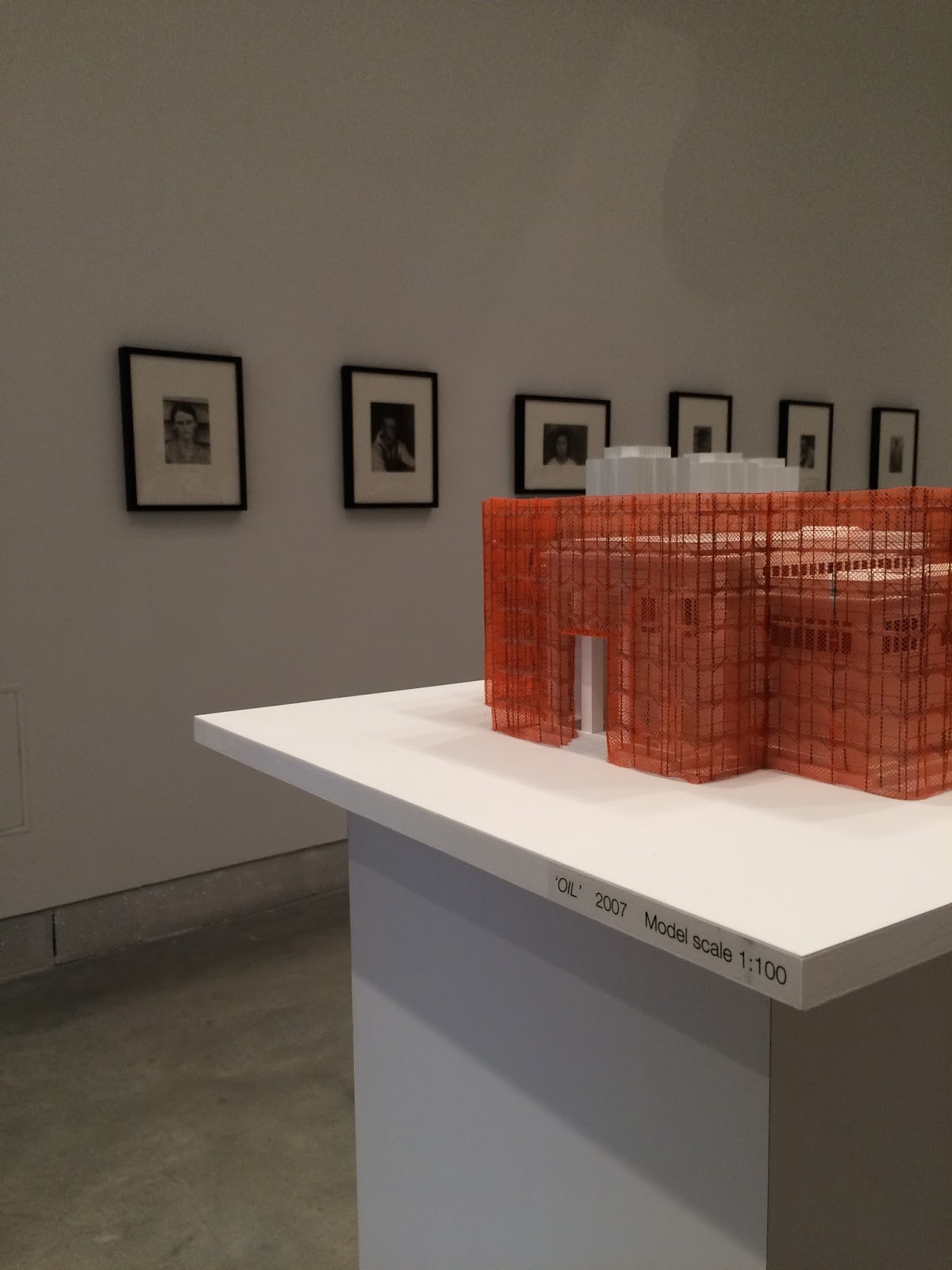
Another highlight for me was seeing some of Walker Evan's photographs from his series "Let Us Now Praise Famous Men" which I had studied in my course with Stephanie Schwartz on American Media. The photographs were hung on the walls of a room which also showed miniature scale models of architectural structures by Isa Genzken as a part of her project "Realized and Unrealized Outdoor Projects" made throughout the 1980s and 90s. I thought the play with urban/rural, utopia/dystopia made for an interesting dialogue between the works.

Some other highlights included:

Hito Steyerl's installation and video in the German pavilion
http://www.deutscher-pavillon.org/2015/en/


Moon Kyungwon & Jeon Joonho in the South Korean pavilion


Thursday, 14 May 2015

"Not Yet" at the Reina Sofia

I wanted to write a short note on having had the wonderful opportunity to listen to curator Jorge Ribalta chat to our class about his recent exhibition "Not Yet" on display now at the Reina Sofia in Madrid. It is the kind of exhibition that requires multiple viewings and ideally with some space in between in order to digest the tightly packed and rich material included in the show. To say that the amount of research that Jorge put into making this exhibition is impressive would be an understatement; the archival material was so interesting and so well selected. The rooms in the exhibition were grouped by country, displaying documentary photography and archival journals and newspapers on specific moments of crises in the 1970s relating to that country's political instabilities. In addition, I very much enjoyed the lecture by Steve Edwards on Modernity and Documentary and on an effort to loosen the dichotomy of these terms that is so often applied to them.

The exhibition gave me a lot to think about with regard to research and curation. But also, I came to really feel that documentary photography and film is where I would like to continue to focus my art historical practice. I hope to be able to adopt a more historical approach rather than focusing primarily on theory. I also realized the importance of archival photographs in the press and greater media in an attempt to produce a thorough analysis of visual culture of a moment in history. It feels like an exciting time to learn all of these things.

Here is a picture I took during Steve Edwards's talk. His Powerpoint slide quotes two important texts by Martha Rosler and Allan Sekula.


Tuesday, 5 May 2015

Dialogue: Pellets

Pellets

- You know when you are the only one who is drunk?
- What do you mean?
- Like, when you just for some reason got much drunker than anyone else and its weird.
- Weird how?
- Like, when you laugh at things the others don’t laugh at or even when they don’t laugh at your genuinely funny jokes? Like, when you want another pint but its Monday night and your friends might be leaving to go home soon? What would they do at home anyway? Why would they need to go so early?
- Dunno. Facebook. Netflix.
- Yeah, I guess. But like, you know those times you just really need to speak to humans in person and not on your computer?
- Like Skyping or in general?
- In general.
- Yeah, I know that feeling.
- Sucks right?
- Yeah.
- Like, those nights you just wanna stumble home later than you should, and you kinda did it on purpose or whatever but everyone is drinking juice or half pints?
- Yeah, I know.
- Like, when all you want to do is to talk about life and sex and self-esteem but everyone is going on about their professional achievements, interviews, their moms.
- Yeah.
- And when you want dogs to come into the pub and go right to you because they feel some kind of special connection with you, that you are somehow a better human that anyone else they can see but they just obey their owners, probably wondering what beer is and what the hype is all about.
- Huh?
- Dogs. Dogs that go to pubs.
- Right.
- The kinds of dogs who don’t exercise too much because the sort of feel the weight of it all. The ones who wait for the leftovers of your tuna lunch because it tastes better than doggy pellets.
- Doggy pellets?
- You wanna go get drunk?
- Ok. When?
- Now.
- Oh, right. Yeah, ok.

Wednesday, 29 April 2015

3 poems published by Metatron

Metatron Press recently published on their blog three of my poems which are very dear to me: Before The Grotto, My Boyfriend is a Gangster, The Future. 

Here is the link to the poems: http://www.onmetatron.com/blog/2015/4/28/3-poems-jessica-schouela

Below is the image they chose to accompany my poems and is a photo by Rebecca Storm:

Tuesday, 28 April 2015

Rabbi Ronnie Cahana

Watching Kitra Cahana's touching TED talk on her father, Rabbi Ronnie Cahana, the rabbi at the congregation in Montreal that my family has been a member of all my life, I was reminded of a meeting that took place some weeks in anticipation of my brother's bar mitzvah. Rabbi Cahana had called our family into his office for a chat. Once we were seated he asked us each individually "what is your relationship with God?". Coming from a less than religious family, my brother and father being proclaimed atheists, I suppose the awkwardness we all felt was palpable. We had been confronted with such a genuine and honest question and we were afraid of disappointing him. I remember giving a similar answer to how I suspect I would respond today: I know its there somewhere but at what capacity and to what extent, well, I guess that changes all the time. 

Rabbi Cahana suffered a stroke in 2011 leaving him in a state of paralysis from his feet to just below his eyes. He has since been recovering slowly, but beautifully. Here is the link to Kitra's talk: http://www.ted.com/talks/kitra_cahana_my_father_locked_in_his_body_but_soaring_free?language=en

Link to Rabbi Ronnie Cahana's website: http://rabbicahana.com


Photograph by Kitra Cahana

Sunday, 26 April 2015

A few quotes by Colin Low on the Challenge for Change on Fogo Island

“The Fogo Island project, which became a cornerstone of that program, was like one of those events in science where conditions come together and seem to prove something fundamental. But then, try and duplicate the results in another laboratory! I was still defending the Fogo approach as not only practical, but essential."

“It was a community development program in Newfoundland, well planned and well funded, that used film as a catalyst to generate local debate – to give local people a voice and even editorial control – and to provide those people with access to people in power, via film. Not one film but a whole series of mini-films. It was meant to be a step in incorporating media into the democratic process. The creation of a communication loop, as we called it.”

“But there has never been any way of proving that film caused the change… fourteen years later, Fogo Island is one of the healthier communities in Newfoundland, and we can’t say for sure why it is that way.”

“Those moments when rancour and hostility and anger are transformed by reason and become cooperation and accommodation: I have seen the, triggered by an appropriate film. This attitudinal change is hard to get on film, but it is the very root of community. Those moments are hard to record. There are cultures that understand that, in negotiations, people must not be allowed to lose face; they must be able to maintain dignity for the good of the entire community.”


Colin Low, Grierson and Challenge for Change (1984), in Waugh, Thomas and Baker, Michael Brendan and Winton, Ezra. Challenge for Change Activist Documentary at the National Film Board of Canada. Montreal and Kingston: McGill – Queens University Press (2010).