Sunday, 3 March 2024

Makenna Goodman, The Shame

It doesn't happen often, but sometimes a book comes to you at just the right time, when you didn't know you needed it most. 

Makenna Goodman's superbly written The Shame was one such story. This novel pierced me and recognised me and this current moment to an uncanny degree that my image of the protagonist Alma's Vermont house and garden merged with the very new, real experience of moving into my new house in and having a garden of my own for the very first time. 

The feeling that a book could have been written with you and your history in mind is curious. The sense of seeing and knowing you get from a person you don't know but who speaks (to you? to a group of yous? to a person they imagined could be like you or completely different from you?) from text on a page is, in rare but precious instances, like magic, a challenge to the time space continuum as well as to the idea that you are individual, unique, in a manner both humbling and disarming.  


Sunday, 21 January 2024

Philip Guston at the Tate Modern

Always amazing to see a retrospective of one of your favourite painters - I've loved Gustin's work since I learned about it in a post-war figurative painting seminar at The University of Edinburgh during my year abroad in 2012. I especially enjoyed his tender depictions of his wife, Musa McKim, and discovering their poetic/drawing collaborations. 


Monday, 15 January 2024

Painting of a Sicilian Christmas cake


Haven't painted acrylic on canvas since I was 15 so it was a real treat to get back into it! 

Sunday, 31 December 2023

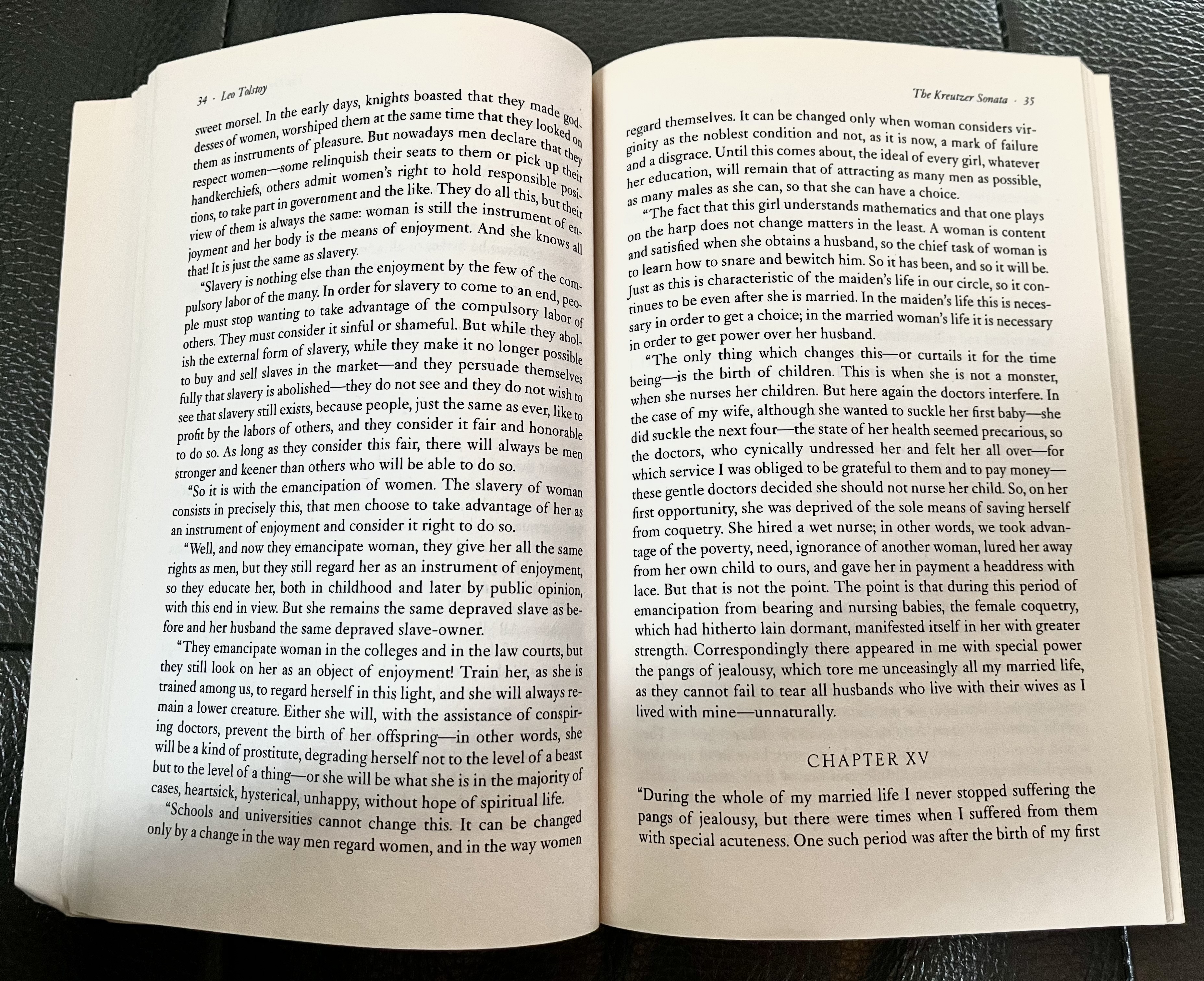
Leo Tolstoy, The Kreutzer Sonata


Really fascinating novella that exposes Tolstoy’s conflicted feelings about the dangers of love and marriage. For every “progressive” insight into the emotions stirred up by love (lust, jealousy, possession, oppressive monogamy), comes a set of propositions that sex and love are dangerous and only a life of celibacy can ensure murderous rage and immoral acts are dodged. Tolstoy’s fear of marriage and sex (and his insistence that women do not enjoy sex and are thus degraded by having to succumb to the carnal needs of men) is further illustrated in his manifesto-like sequel that follows the main narrative. 

An example: 


Doris Lessing’s preface is also highly entertaining wherein she chronicles a speculative comedic, clumsy, and messy (breast milk) sex scene in the Tolstoy household between the author and his wife, hypothesises that perhaps Tolstoy was bad in bed. 


Saturday, 23 December 2023

Daisy Lafage, Lovebug


Daisy Lafarge’s Lovebug is an extremely impressive and complex exploration of pathogens and takes a semiotic, psychoanalytic lens to look at how we could come to view and experience microbial life (pathogens, bacteria, viruses, bugs) as not the “bad” to a “good” counterpart (human, love) but to see both - that is, love and bugs - as made of the same stuff. 

Lovebug draws heavily upon epidemiology and microbiology and using language and poetics as a tool to disassemble assumptions and instincts. Lafarge proposes a more harmonious coexistence, one informed by a Kleinian depressive position (as opposed to a paranoid one) whereby we learn to live and cope with/endure ambivalence and think differently about how we fear or respond to the abject other not as a threat but as something likened to us. Sutured throughout this book are themes of merging/splitting, mirroring, attachment, love, hate, terror, rejection, consumption, violence, sex, illness, death, cannibalism, inside/outside, self/other, metaphor and materiality. Definitely a book to read, enjoy and think about again, and then again.